
West Nusa Tenggara’s Woven Heritage: Inside the Living Tradition of NTB Textiles
00:00
00:00


- NTB’s woven textiles remain a living heritage across Lombok, Sumbawa, Bima and Dompu, carrying identity, ceremony and philosophy through motif and technique.
- Key variations include Lombok songket from Sukarara, functional Lombok ikat, Bima’s Tembe Nggoli and Sumbawa’s Kre Alang, plus Dompu’s raised-texture Munapa’a.
- Preservation efforts now combine community participation, government training and digital marketing, as well as new product directions such as halal-certified weaving from Maringkik.
Traditional woven fabrics from West Nusa Tenggara (NTB) are among Indonesia’s most important cultural legacies. Every carefully arranged thread forms motifs rich with meaning, reflecting the identities of diverse communities across Lombok, Sumbawa, Bima and Dompu.
The distinctive character of NTB textiles lies in their intricate patterns and vivid color combinations, often achieved through natural dyes that highlight the exceptional skill of local artisans. These works are more than cloth: they function as art, and they remain central to customary rites, weddings and religious celebrations.
Sejarah dan Filosofi Tenun NTB
The weaving tradition in NTB dates back centuries. In Lombok, the term tesesek describes the process of inserting threads one by one until the fabric becomes tight and dense. The craft has been passed down through generations; in the past, Sasak women were expected to master weaving as a requirement for marriage, learning the skill from childhood.
Lombok weaving is generally grouped into two main types: songket, featuring multicolored cotton threads as well as silver or gold accents, and ikat, which is simpler and more utilitarian.
Motifs have also followed shifts in local belief systems. Before Islam spread widely, designs commonly depicted living creatures. As Islamic influence grew, many weavers moved toward plant-based motifs such as vines and flowers.
In Bima and Sumbawa, woven textiles also carry a long historical trace. Tembe Nggoli from Bima and Kre Alang from Sumbawa—both now displayed at the Mandalika MotoGP Museum—have been produced since the 19th century using cotton and silver threads.
On Tembe Nggoli, the Nggusu Waru motif, shaped like an eight-sided flower, symbolizes eight elements of leadership responsibility in the Mbojo community. Kre Alang, meanwhile, features the lonto engal and cepa motifs, which express community life, togetherness and mutual cooperation.
Dompu’s Munapa’a weaving is known for a raised, carved-like texture; the term “munapa’a” can be read as “chisel-shaped.” Historically, the cloth was reserved for Dompu’s kings and nobility, and it was recognized as an item of intangible cultural heritage in 2023.
In Central Lombok, the indigenous community of Rembitan continues to preserve the kembang komak motif, combining vertical and horizontal white lines against a black base.
The motif is widely used in Sasak ceremonies and is produced by indigenous women who weave to meet their families’ daily needs.
Variasi Tenun Khas NTB
Tenun Songket Lombok
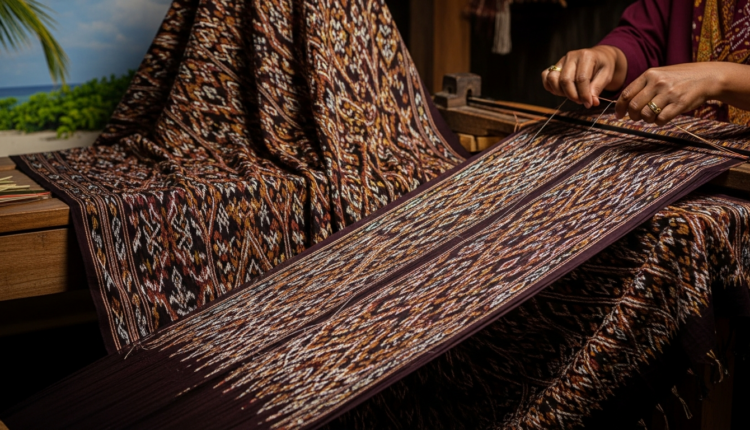
Sukarara village in Jonggat district is widely known as a center for Lombok songket. Located around 25 kilometers from Mataram, the village is easy to reach; nearly all adult women weave, and the expertise is passed down across generations.
Sukarara weaving is regarded as high quality, which is why its fabrics have long been worn by nobility and even by Indonesian presidents.
Tenun Ikat Lombok
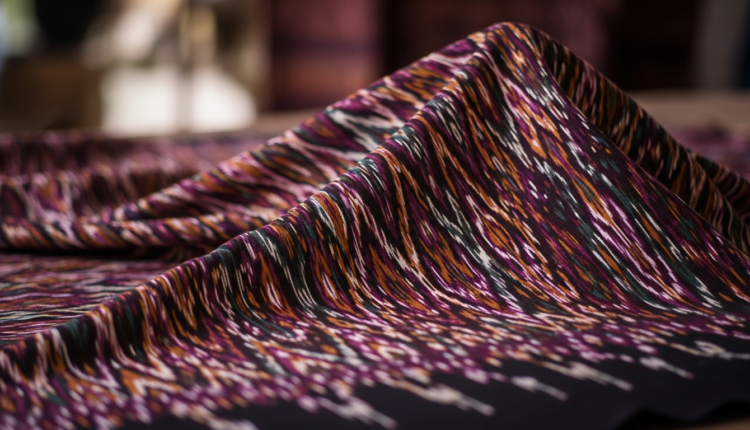

Lombok ikat is made by tying sections of thread before dyeing them with natural colorants, so the tied parts retain their original base color. The process is repeated to build harmonious patterns that appear on both sides of the cloth.
Among the Sasak, ikat serves everyday functions: baby slings, blankets, shrouds, and even items used for worship.
Tenun Bima dan Sumbawa
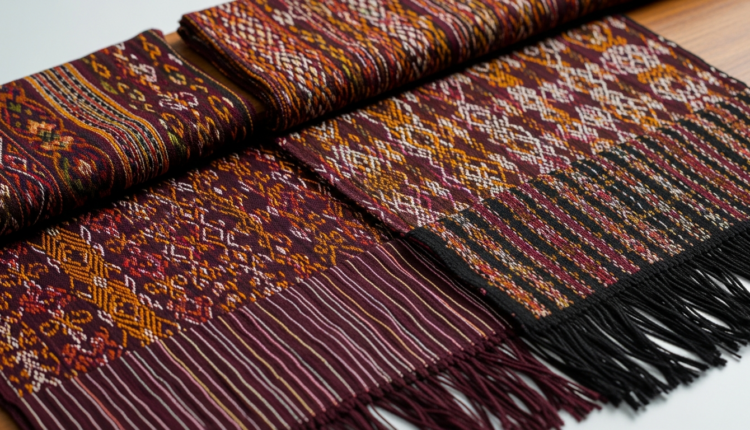
Tembe Nggoli, a songket sarong typical of Bima, is made from cotton and silver threads and is known for its checkered layout and the Nggusu Waru motif. The cloth was worn by Bima’s nobility and is produced through a technique that combines weaving with embroidery.
Kre Alang from Sumbawa uses cotton thread with silver embroidery. Its lonto engal motif, with flowing curves, represents togetherness, while cepa refers to plant forms. The textile has traditionally been worn by the Sumbawa Sultanate family during customary ceremonies.
Tenun Munapa’a Dompu
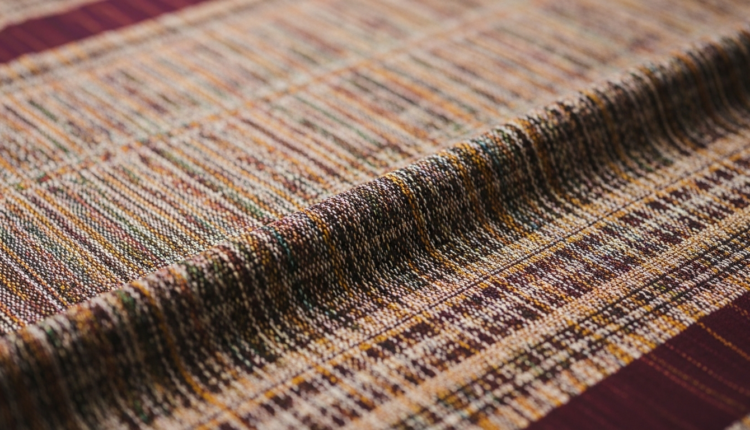
Munapa’a originates from Ranggo village in Dompu. Its hallmark is a three-dimensional checkered pattern resembling woven bamboo wall panels. The technique was developed by Umi Hajrah in 1987, and today virtually every home in Ranggo has its own loom.
Tenun Rembitan dan Maringkik
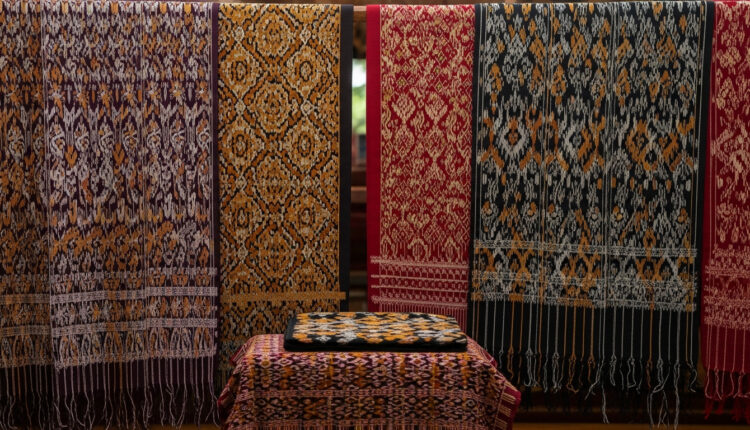
In Telok Bulan hamlet, Rembitan village, indigenous women such as Inaq Ketok have woven the kembang komak motif since their teenage years. The design features vertical and horizontal white lines on a black background and is used across a range of rituals.
Maringkik Island in East Lombok is now known as a pioneer of halal weaving. The NTB provincial administration has supported textiles made with halal-certified thread, natural dyes and sterile processes designed to meet Islamic requirements.
Halal thread is finer than standard thread, producing fabric that feels more comfortable. The innovation is expected to open new markets and lift overall textile quality.
Preserving NTB weaving requires broad participation. The public can buy authentic cloth directly from artisans in weaving villages, wear woven textiles for official events or everyday fashion, and attend cultural festivals to better understand the history behind the craft.
Government support—through training, halal-tenun development and digital marketing facilities—has helped artisans adapt to global market demands.
Regeneration also needs to be strengthened so younger people see weaving as relevant and worthwhile. Success stories such as the Dina MSME and Rembitan’s village-owned enterprise (BUMDes) show that tenun can support local economies while safeguarding cultural heritage.
In today’s modern era, NTB woven textiles remain compelling for how they blend philosophy, aesthetics and innovation. From Sukarara songket to the three-dimensional Munapa’a patterns, each cloth tells a story of identity, perseverance and hope for the future.
Indonesianpost.com | GNFI
