
Dyslexia is not laziness: The hidden learning disability many schools still miss
00:00
00:00


- A teen in Bogor remains years behind in school because he still cannot read or write—an example of how dyslexia can be overlooked despite normal speech and social skills.
- Dyslexia is a neurobiological learning disability that affects reading and spelling, not intelligence, and early identification is key to effective support.
- Beyond families, schools and policymakers need screening, teacher training, and formal accommodations so dyslexic students are supported rather than stigmatized.
At a school in Bogor, West Java, a teenager is still in fourth grade—years behind where students his age are typically placed. Despite repeating lessons, attending extra tutoring, and joining additional classes, he still cannot read or write.
Outside reading and writing tasks, he looks and behaves like other children: he speaks clearly, follows spoken instructions, and socializes easily. The difficulty appears mainly when he faces letters and text, as if the written page is a code he cannot unlock.
What worries observers is not only the child’s struggle, but the school’s limited awareness: some teachers reportedly do not recognize the term “dyslexia,” even though the concept is easy to find through a simple online search. This gap in understanding often shifts blame onto the child instead of prompting the system to adjust to different learning needs.
The International Dyslexia Association defines dyslexia as a specific learning disability associated with persistent difficulties in reading and/or spelling. Dyslexia is not a disease; it is a neurobiological condition that typically exists from birth.
Clinicians at Siloam Hospitals have noted factors linked with a higher likelihood of dyslexia, including premature birth or low birth weight, family history, harmful prenatal exposures (such as nicotine, alcohol, drugs, or infection during pregnancy), and injury or abnormalities in brain regions involved in language processing. In daily life, this can translate into difficulties recognizing letters, matching letters to sounds, reading, spelling, and writing.
A crucial point is that dyslexia is not a measure of intelligence. Many individuals with dyslexia show strong reasoning, creativity, and high performance in non-text-based tasks.
Public narratives often mention historical figures such as Albert Einstein, Leonardo da Vinci, and Steve Jobs, along with entertainers including Whoopi Goldberg and Tom Cruise. In Indonesia, figures such as Deddy Corbuzier, Aska, and Tamara Bleszynski have also spoken openly about dyslexia.
For many families, the real turning point is not “overcoming” dyslexia, but learning strategies that work with a brain that processes written language differently. The risk is greatest when a child is misunderstood and labeled “stupid” or “lazy,” because that stigma can be more damaging than the learning difficulty itself.
Lost opportunities
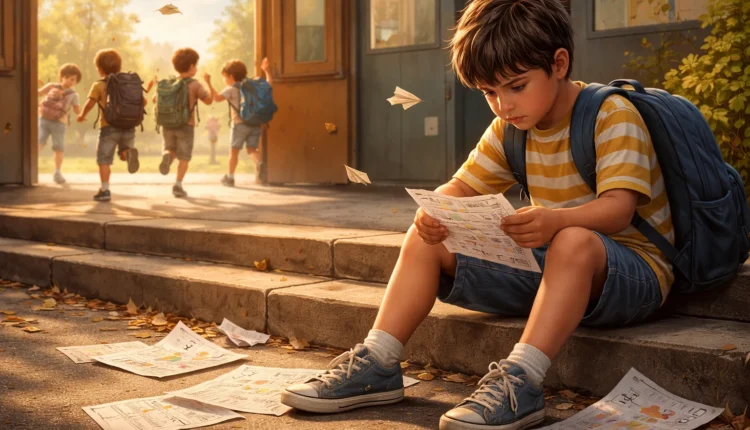
Repeated failure without a clear explanation can erode a child’s confidence and sense of worth. Over time, this may contribute to anxiety, depressive symptoms, and avoidance of school.
In severe situations, discouragement can lead to dropping out and losing long-term opportunities. This is why recognizing dyslexia early matters—not to “excuse” difficulties, but to prevent avoidable academic and psychological harm.
Early signs can appear before formal schooling. In preschool, children may struggle to remember letter names or frequently mix up similar letters such as b and d, p and q, or m and n.
They may also have difficulty distinguishing similar sounds, memorizing song lyrics, or reciting sequences (numbers, days, or letters). These signs are not proof on their own, but patterns that warrant attention when persistent.

Once reading instruction begins, children with dyslexia may read slowly, hesitate, mispronounce words, or spell inconsistently. Writing and copying long text can be unusually tiring and time-consuming.
At the same time, many perform well in oral discussions, verbal reasoning, and hands-on activities—creating a confusing contrast for adults who expect reading skills to match spoken ability. Because dyslexia is not visible physically and social behavior may look typical, children are often assumed to be “not trying.”
A one-size-fits-all education system can worsen the problem by measuring every child through the same literacy pathways, without acknowledging that learning routes differ across brains. The goal is therefore not “curing” dyslexia, but managing it—building functional reading and writing skills with the right approach.
The first practical step is early identification. When signs appear consistently, parents and teachers are advised to consult psychologists or special education professionals, because earlier support generally leads to better outcomes.
Emotional support is also central. Children need repeated reassurance that they are capable and valued, and that struggling with text does not define their intelligence or future.
Phonics-based approaches

In classrooms and tutoring settings, multisensory phonics programs such as Orton-Gillingham are commonly used to support dyslexic learners. The approach links seeing letters, hearing sounds, speaking them aloud, and tracing or writing—step by step, with patience rather than speed.
The sequence typically starts from basic letter forms (often lowercase), focuses on commonly confused shapes, then progresses to syllables, short sentences, and more complex text. Consistency and a calm learning environment are emphasized.
Technology can also reduce barriers. Tools such as text-to-speech, speech-to-text, audiobooks, and AI-based supports can help students access content and demonstrate understanding even when reading remains challenging.
However, individual effort alone is not enough. Schools are urged to develop clear screening and referral pathways, rather than simply adding more tutoring hours without diagnosis.
Teacher training is another key gap: educators need practical knowledge about dyslexia, early signs, and classroom accommodations. Education authorities can support this through training modules, strengthened special education staffing, and formal rules on assessment accommodations.
Ultimately, placing children in unsuitable learning conditions and letting them fall behind for years is not merely a technical failure—it is a failure to protect a child’s right to learn in a way that fits their needs. Dyslexia is not a tragedy; ignorance and stigma are what make it tragic, and the responsibility to change that lies with adults and the education system.
*) A. Roni Kurniawan is an education practitioner, trainer/educator at Yamjaya, and a developer of practical educational methods grounded in psychology at Rumah Belajar Bersama (RBe).
Indonesianpost.com | Detik
