
The Untapped Power of Malapari in Indonesia’s Energy Transition
00:00
00:00


- The Malapari tree (Pongamia pinnata) is gaining recognition as a promising biodiesel source in Indonesia. With up to 44 percent oil yield and high adaptability to harsh environments, it plays a vital role in the nation’s renewable energy ambitions.
- Native to Southeast Asia, Malapari thrives on marginal lands and offers both ecological and economic benefits. BRIN and local partners are developing it as part of Indonesia’s bioenergy and carbon reduction strategy.
- Beyond biodiesel, Malapari supports rural livelihoods through agroforestry, acts as a carbon sink, and strengthens Indonesia’s move toward sustainable energy independence.
The Malapari tree (Pongamia pinnata (L.) Pierre) has long been regarded as one of Indonesia’s most promising biofuel sources. As the government intensifies its transition toward renewable energy, biodiesel — a non-fossil, plant-based fuel — continues to gain attention as a viable replacement for conventional diesel.
Research by Aminah et al. (2017) in the Journal of Forest Products Research found that Malapari seeds contain between 30 and 40 percent triglycerides, a natural oil highly suitable for biodiesel production. This significant oil content positions Malapari as a strategic candidate for bio-based renewable energy development.
Malapari in Indonesia
Originally native to India and Southeast Asia, Malapari has now spread widely across tropical regions such as Australia, China, New Zealand, and parts of the Americas. In Indonesia, it is naturally found across the eastern coast of Sumatra, Bangka, Banten, West Java, East Java, northern Bali, East Lombok, and several islands in Maluku.
The tree thrives in coastal ecosystems due to its high tolerance to salinity, flooding, and open sunlight. However, it can also grow in inland regions at altitudes reaching 1,200 meters above sea level, making it an adaptable species suited to Indonesia’s diverse geography.
Botanical Characteristics
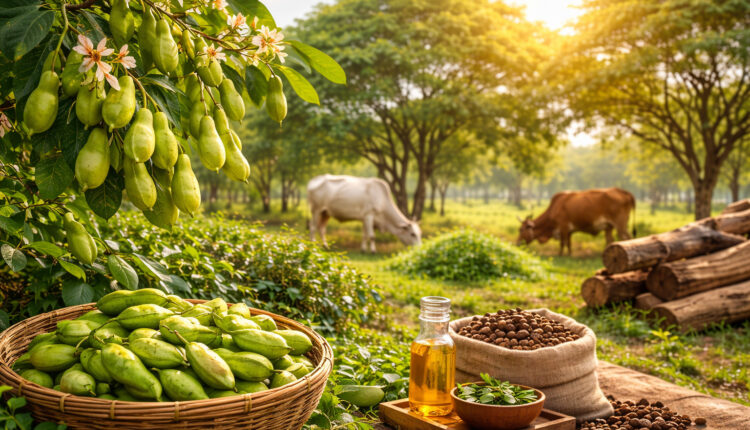
Scientifically known as Pongamia pinnata (L.) Pierre, this species also goes by Millettia pinnata and Millettia novo-guineensis. Across Indonesia, it bears various local names: mabai in Bangka, ki pahang laut in West Java, kranji in Madura, marauwen in Minahasa, and kuanji in Bali.
Botanically, Malapari belongs to the Leguminosae family. It is a fast-growing shrub or tree that can reach heights of 15–25 meters within four to five years. Its grayish bark can grow up to 80 centimeters in diameter, while its compound white-to-purple flowers and thick, oval pods typically contain one or two seeds — the main source of its valuable oil.
Energy and Economic Potential

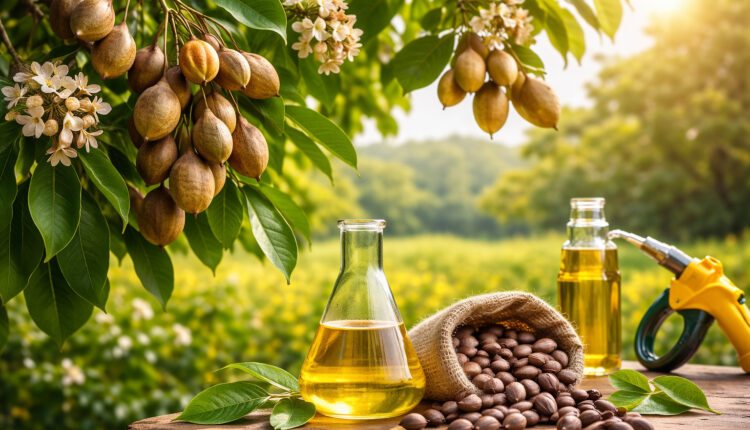
Beyond its role as a biodiesel feedstock, Malapari serves multiple purposes. Its leaves are used as livestock feed and green manure, while dried leaves act as natural insect repellents. In traditional medicine, the tree’s leaves, flowers, roots, and bark are known for various therapeutic properties. The wood, meanwhile, is often utilized as fuel and furniture material — reinforcing the tree’s multifaceted economic and social value.
Indonesia’s National Research and Innovation Agency (BRIN) continues to promote Malapari development as part of the nation’s energy sovereignty strategy. One key project is located in Lembata Regency, East Nusa Tenggara, carried out in collaboration with PT Lembata Hira Sejahtera and local authorities.
BRIN’s Senior Researcher, Prof. Budi Leksono, emphasized that Malapari produces non-edible oil with strong potential for both biodiesel and aviation biofuel (bioavtur). “Naturally, the oil yield of Malapari ranges from 20 to 28 percent, but through genetic selection and optimized extraction methods, it can reach up to 44 percent,” he stated.
Thriving on Marginal Land
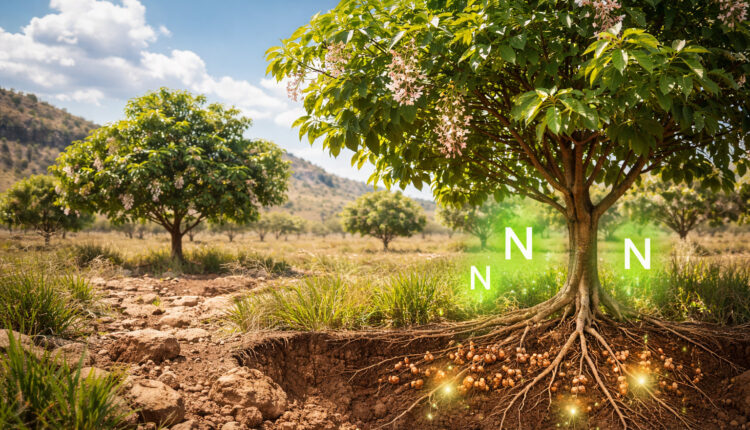
Ecologically, Malapari holds a unique advantage as a leguminous plant capable of fixing atmospheric nitrogen through its root nodules. This characteristic reduces its dependency on nitrogen fertilizers and allows it to flourish on marginal lands and in arid regions — particularly across eastern Indonesia.
Nevertheless, Prof. Budi cautioned that habitat fragmentation caused by land-use conversion could degrade the plant’s genetic quality, which may affect its long-term productivity.
The development of Malapari in Lembata follows a community-based agroforestry system, enabling farmers to grow food crops and other commodities beneath Malapari canopies. This approach not only boosts local livelihoods but also contributes to carbon sequestration and national emission reduction targets.
“As we move forward, strong cross-sector collaboration will be crucial to accelerate Malapari’s growth as a sustainable, locally driven strategic commodity,” Prof. Budi concluded.
Indonesianpost.com | GNFI
