
DMI chief Jusuf Kalla inaugurates Masjid Pantai Bali soft opening, highlights community welfare
00:00
00:00


- Jusuf Kalla officiated the soft opening of Masjid Pantai Bali in Jembrana, calling it a visionary step that broadens Bali’s tourism beyond culture and nature.
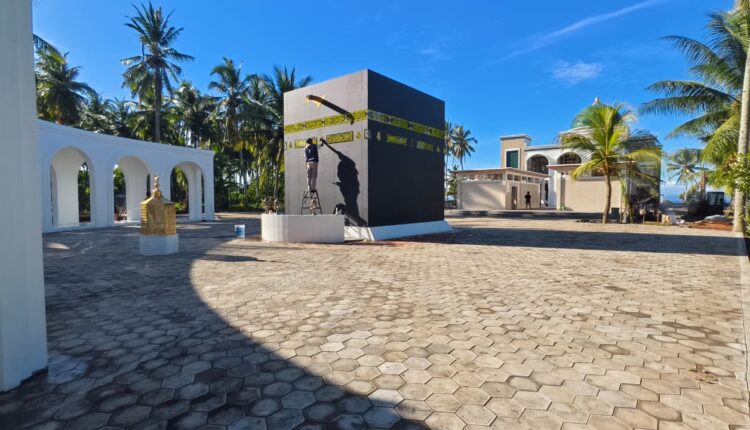
- Local leaders and DMI Bali highlighted the mosque’s role in community welfare and said its integrated manasik hajj facilities are unique on the island.
- Organizers said the project was built through pentahelix collaboration and aims to blend worship, education, environmental care and local economic empowerment.
The Masjid Pantai Bali religious tourism site was officially launched in a soft opening by former vice president Jusuf Kalla, the 10th and 12th vice president of the Republic of Indonesia, during a solemn ceremony held in the coastal area of Jembrana regency, Bali, on Feb. 6, 2026.
Speaking online, Kalla apologized for not attending in person and said he hoped to visit Masjid Pantai Bali directly but was unable to do so due to various constraints.
He said the inauguration of the Masjid Pantai Bali religious tourism site marked a strong and forward-looking achievement. The presence of a landmark mosque by the beach, he added, signaled that Bali’s tourism could be developed not only around culture and nature, but also through religious-based offerings.
“The inauguration of the Masjid Pantai Bali religious tourism site is a very good achievement. In Bali, a beautiful mosque has been built on the beachfront, and this shows that tourism in Bali can also be developed in a religious way,” Kalla said.
He underlined that mosques function not only as places of worship but also as centers for community prosperity. In line with the guidance of the Indonesian Mosque Council (Dewan Masjid Indonesia, DMI) to both “prosper and be prospered” by mosques, he said mosques should deliver tangible welfare benefits for surrounding communities.
“A mosque can help improve the prosperity of the community around it, especially a beautiful mosque like Masjid Pantai Bali in Jembrana,” he added.
His remarks were echoed by Jembrana Regent I Made Kembang Hartawan, who said mosques should not only serve religious functions but also help drive tourism in ways that prioritize environmental protection and community welfare.

“A mosque is not only for worship, but it can also drive tourism—tourism that keeps the environment clean and is able to improve the welfare of the community,” the Jembrana regent said.
On the same occasion, the regent also urged DMI at both the national level and in Bali to position Masjid Pantai Bali as a center for manasik hajj activities on the island.
“If there are manasik activities, please bring them to Masjid Pantai Bali in Jembrana,” he said.
Meanwhile, DMI Bali chairman Ustadz Bambang Santoso said the manasik hajj infrastructure at Masjid Pantai Bali was the only integrated manasik hajj facility on the island. He said he was committed to encouraging DMI chapters across Bali to hold manasik hajj programs at Masjid Pantai Bali.
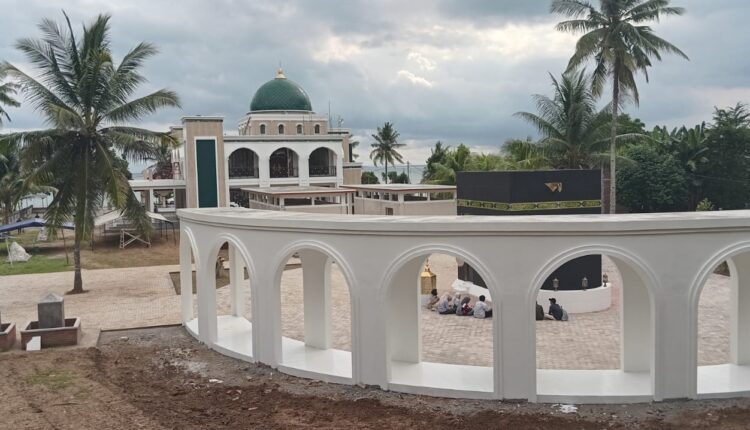
Earlier, Firmansyah Dimmy, chairman of the Masjid Pantai Nusantara Foundation (Yayasan Masjid Pantai Nusantara, YMPN), speaking on behalf of the mosque’s management board, said the inauguration of Masjid Pantai Bali and its manasik hajj center was the result of a pentahelix collaboration involving academics from various universities, government, businesses, community groups and mass media.
“This inauguration is not merely the opening of a building, but essentially the inauguration of a hope—to build solidarity among religious communities in shaping a better national civilization, and to realize Islam as rahmatan lil ‘alamin,” he said.
The event, led by youth organizers with Akbar Prima Jaya as committee chair and Arief Dharmawan as secretary, concluded with a visit to the Masjid Pantai Bali area, including the main prayer hall, ablution facilities, the manasik hajj site and the beach tourism zone, followed by a viewing of a sailboat parade.
Masjid Pantai Bali is expected to become a new icon of religious tourism in Bali, combining worship, education, environmental awareness and community-based economic empowerment, while serving as a symbol of Islam as rahmatan lil ‘alamin.
Indonesianpost.com
