
How Indonesian and Chinese Engineers Are Shaping KCJB Operations


- Young engineers from Indonesia and China are working together to ensure the safe and efficient operation of the Jakarta-Bandung High-Speed Railway while strengthening technical skills and cooperation.
- The KCJB project highlights successful technology transfer, with Indonesian staff gaining expertise through hands-on training and mentorship from Chinese engineers.
- Beyond infrastructure, KCJB represents a growing partnership built on trust, knowledge exchange, and shared commitment to innovation in Indonesia’s transport sector.
Jakarta – Along the Jakarta-Bandung High-Speed Railway (KCJB), trains running at speeds of up to 350 kilometers per hour are reshaping Indonesia’s transportation landscape. Spanning 142.3 kilometers, the railway is supported by a group of young professionals, with an average age of 35, who combine advanced technology, strong commitment, and close collaboration to ensure safe operations while strengthening ties between Indonesia and China.
Lv Yang, a maintenance engineer involved in KCJB’s operations under CRRC Sifang Co., Ltd., is responsible for field inspections and technical guidance in train maintenance. He also plays a key role in training Indonesian staff.
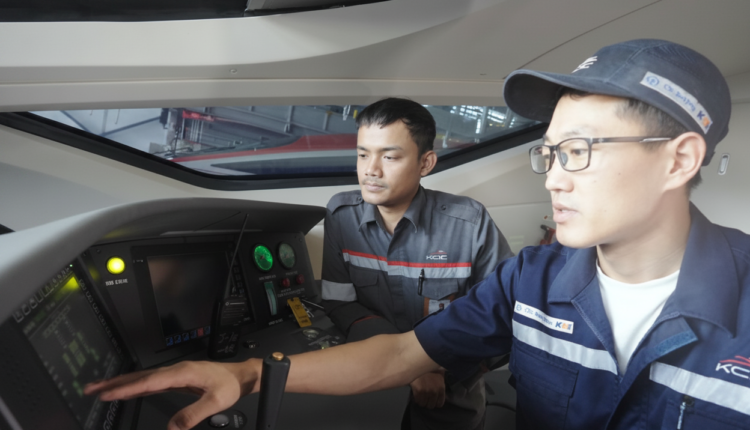
“I developed practical operational methods and created training videos so Indonesian colleagues can learn anytime,” Lv said. Through his guidance, many Indonesian staff have gradually mastered maintenance skills, becoming the first locally trained high-speed rail technicians in the country.
Lv noted that Indonesian staff show strong enthusiasm, learn quickly, and bring high energy to their work. This spirit has motivated the Chinese team and accelerated the transfer of technical knowledge.
Hanung Dwi Pamungkas, a 26-year-old Indonesian technician, said daily maintenance work often presents challenges. “With support from our instructors, we have started producing training videos in Indonesian to make learning and technology transfer easier,” he explained.
Technical engineer Andy Fii Aunillah, 27, highlighted the importance of daily coordination before maintenance begins, including joint evaluations of inspection materials. “Chinese engineers are diligent, practical, and highly knowledgeable. Their dedication is truly inspiring,” he said.
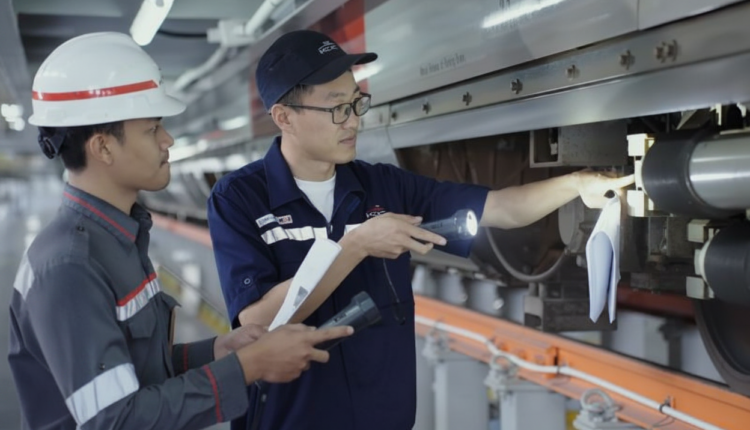
Qiu Kaifeng, a second-level ground mechanical maintenance engineer, recalled that Indonesian staff initially struggled with installation precision. “We practiced repeatedly together and refined the techniques. Now many of them can complete basic maintenance tasks independently,” he said.
Agus Nurrohman, an Indonesian engineer, emphasized that hands-on practice and repetition are essential. “Continuous training helps sharpen technical skills and build confidence,” he said.
Han Tengfei, a maintenance scheduling supervisor, observed that Indonesian dispatch staff are young, collaborative, and actively exchange cultural insights with their Chinese counterparts, often using translation tools.

“I enjoy working with Chinese instructors. We share stories about nature and food from our countries during breaks. I hope to join a technical exchange program and visit China one day,” said Dwiki Sanjaya, an Indonesian dispatcher planner.
Indonesian professionals have shown equal enthusiasm in daily operations. Hanung pointed out the mutual support within the team, where Indonesian staff contribute local experience while Chinese staff provide technical expertise. This collaboration strengthens both operational performance and communication.
Arif Gumilang Pangestu, 31, a senior maintenance team leader, said open communication and mutual respect have enabled efficient task completion. He noted that Indonesian staff benefit from advanced technical knowledge and efficient work methods, while Chinese staff gain valuable field experience.
Andy Fii Aunillah also stressed the importance of structured coordination before maintenance tasks, reinforcing teamwork and consistency in operations. “Their work ethic and technical mastery continue to motivate us,” he added.
The strong collaboration did not develop overnight. In the early stages of operations, local residents often flew kites near the railway, posing safety risks. Lv and Indonesian staff conducted safety outreach in schools and nearby communities and installed warning signs, significantly reducing hazards. This grassroots initiative reflects how young professionals from both countries address challenges together.
Wu Haogang, Director of Operations and Maintenance at CRRC Sifang, said the partnership is built on open communication and trust. “Through hands-on teaching and mentorship, we have trained 78 ground mechanical engineers, 19 dispatchers, and 23 maintenance staff, guiding them from beginners to independent professionals,” he said. Indonesian staff have also contributed practical improvements that enhance operational efficiency.
Outside work, staff from both countries engage in cultural and sports activities. Han Tengfei noted that Indonesian staff excel in badminton and willingly share their skills, reflecting the same spirit of cooperation seen in their professional roles.
Zhang Zhiyi, Deputy General Manager of CRRC Sifang Co., Ltd., praised the young professionals for their courage, innovation, precision, and persistence in ensuring safe KCJB operations. “Their work supports the localization of high-speed rail technology in Indonesia, develops local technical talent, and strengthens high-quality operations, contributing to the Belt and Road cooperation between China and Indonesia,” he said.
KCJB officially began operations on October 17, 2023. The 142.3-kilometer railway, jointly developed by Indonesia and China, reduces travel time between Jakarta and Bandung from over three hours to just 46 minutes, offering a faster and more comfortable journey.
To date, the railway has safely covered more than 7.5 million kilometers—equivalent to circling the Earth 188 times—and has served over 15 million passengers.
Indonesianpost.com | Antara
