
Indonesia Walk for Peace 2026: 57 Monks Welcomed by Yogyakarta Sultan
00:00
00:00


- Fifty-seven monks from four countries arrived in Yogyakarta as part of a long-distance peace pilgrimage to Borobudur for the Vesak 2026 celebration.
- Sri Sultan Hamengku Buwono X described the journey as more than a physical walk, saying it carried messages of humanity, harmony, and national unity.
- The monks, who walked up to 40 kilometers a day, drew strong support from people of different religious backgrounds along their route.
Jakarta – The group, part of the Indonesia Walk for Peace (IWFP) 2026, has been undertaking a long-distance spiritual journey on foot since May 9, crossing islands en route to Borobudur Temple in Magelang for the Vesak Day commemoration.
The monks arrived in the Malioboro area at around 3:45 p.m. local time before proceeding to the Kepatihan Complex, where they were officially received by the Sultan and regional officials.
The delegation comprises 43 monks from Thailand, four from Malaysia, three from Laos, and seven from Indonesia. They are scheduled to reach Borobudur on May 28.
Sultan Hamengku Buwono X emphasized that the pilgrimage represents more than a physical journey, highlighting its deeper message of humanity and interfaith unity.
“It is an honor for the Yogyakarta administration to welcome the participants of the Indonesia Walk for Peace,” the Sultan said during the reception.
He noted that the journey reflects shared human values and collective solidarity. “What they are doing is not merely physical. It carries a message of humanity and togetherness,” he added.
According to the Sultan, the peace walk symbolizes a reflective journey of life and a meaningful effort to connect historical values with present and future realities.
“The Indonesia Walk for Peace represents a form of introspection, a ‘niti-laku’—a reflection on life’s journey—while revitalizing its meaning for today and the future,” he said.
He also stressed that diversity should be embraced as a unifying force. “This journey embodies the spirit of Bhinneka Tunggal Ika, reaffirming that differences in ethnicity, religion, and culture are strengths that unite the nation rather than divide it,” he said.
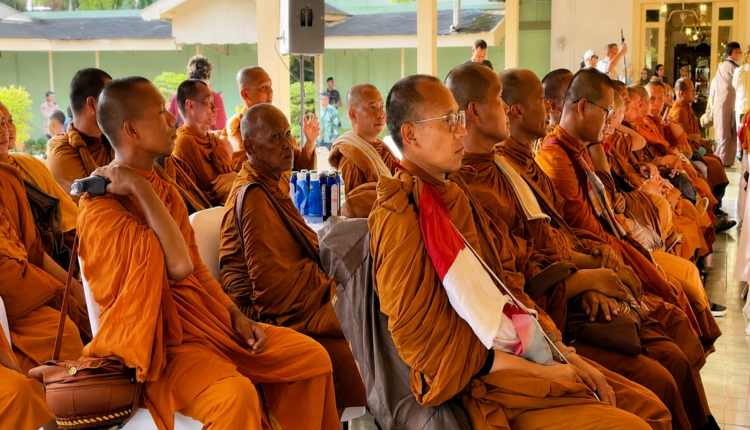
Meanwhile, IWFP 2026 organizing committee chair Tosin said the monks had received enthusiastic support from communities across the regions they passed.

“People from all walks of life—from children to the elderly, even those who were unwell—came out to welcome them with great enthusiasm,” he said.
He added that residents from different religious backgrounds, including Islam, Hinduism, Christianity, and Buddhism, showed strong solidarity by offering assistance along the route.
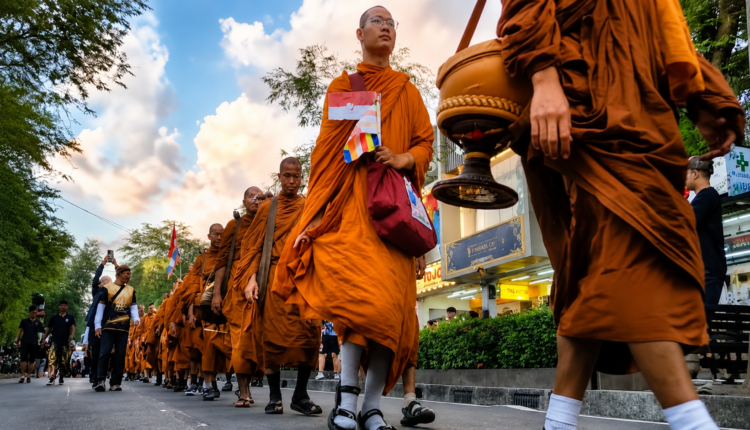
Prior to arriving in Yogyakarta, the monks walked between 30 and 40 kilometers each day, traveling for eight to ten hours under the intense heat of Java since departing from Bali earlier this month.
“The joy came from all communities, regardless of religion. Everyone was happy to see them,” Tosin said.
He explained that the monks aim to promote peace through concrete actions during their journey.
“They move from one place to another on foot, spreading a message of peace through their presence and actions,” he said.
Tosin also highlighted the monks’ perseverance, noting that some continued walking despite sustaining injuries.
“I observed that some had stitches on their feet—three to five stitches—but they kept going the next day without stopping. That level of dedication is extraordinary,” he said.
Despite the physical challenges, the monks maintained a simple lifestyle throughout the journey.
“They chose not to stay in hotels, even when offered. Instead, they slept in open fields, public halls, and temples. They remain humble and adaptable regardless of the limited facilities,” he added.
Indonesianpost.com | Republika
