
Indonesia–Oman Cooperation in Focus as Envoy Meets Indonesia Alyoum


- Bilateral Cooperation: Oman’s ambassador highlighted opportunities for closer cooperation with Indonesia in investment, aviation, renewable energy, tourism and cultural exchanges.
- Aviation and Investment: Discussions covered GMF AeroAsia’s 20-year aircraft maintenance concession in Muscat and investment opportunities under Oman Vision 2040.
- Cultural Connections: Media exchanges, a planned women’s delegation and a proposed book on the Spice Route underscored the relationship’s cultural and historical dimensions.
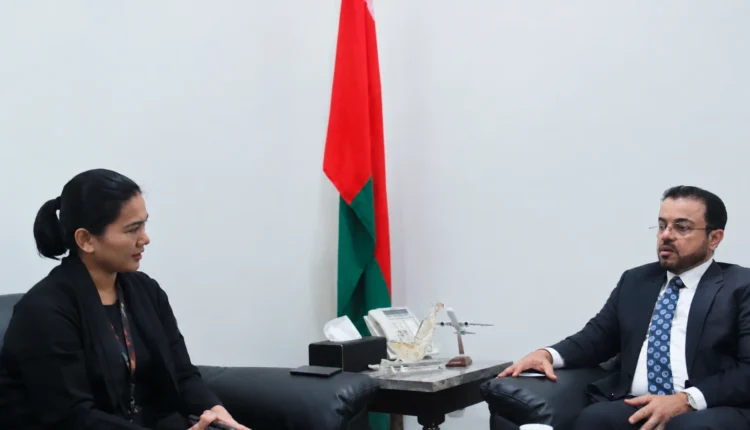
JAKARTA 16 November 2026, Indonesianpost.com — Indonesia and Oman have significant scope to strengthen cooperation in investment, aviation, renewable energy, tourism and cultural exchanges, Oman’s ambassador to Indonesia said during a meeting with Indonesia Alyoum’s editorial team in Jakarta on November 16, 2026.
Editor-in-Chief Muhammad Anas led the Indonesia Alyoum delegation, accompanied by senior journalist Imas Damayanti. The meeting opened with traditional Arabic coffee before moving to an interview on Oman’s development and prospects for bilateral cooperation.
“Diplomatic relations between Oman and Indonesia are very good. We see Indonesia as a major country with considerable potential for cooperation across various sectors,” Ambassador Sheikh Mohamed Ahmed Salim Alshanfari told Indonesia Alyoum in an exclusive interview at the Omani Embassy in Jakarta.
Alshanfari described Oman as a country with a long history, political stability and a strong cultural identity. Ruled by the Al Busaidi dynasty since 1744, the sultanate has entered a new phase of development under Sultan Haitham bin Tarik, who ascended the throne in January 2020.
On the economic front, he highlighted aviation industry cooperation involving Indonesian aircraft maintenance company PT Garuda Maintenance Facility Aero Asia Tbk, known as GMF AeroAsia, as an important development in bilateral relations.
GMF AeroAsia signed a concession agreement with Oman’s Civil Aviation Authority on October 5, 2026, to operate and manage a maintenance, repair and overhaul facility at Muscat International Airport for 20 years. GMF AeroAsia President Director Andi Fahrurrozi and the authority’s president, Naif bin Ali Al-Abri, signed the agreement.
“This partnership is a tangible example of an Indonesian company’s involvement in developing aviation infrastructure in the Middle East,” Alshanfari said.
Air connections between the two countries also include Oman Air’s Muscat–Jakarta route and SalamAir services linking Medan and Muscat, he added.
For passengers departing from Medan, connections through Muscat to Jeddah offer another travel option for Indonesians undertaking umrah, the Islamic pilgrimage to Mecca that can be performed throughout the year.
Alshanfari said air connectivity plays an important role in strengthening people-to-people ties, trade and tourism between the two countries.
Oman Vision 2040: Economic diversification and green energy
Discussing Oman’s national development agenda, Alshanfari outlined Oman Vision 2040, the country’s long-term development framework. The initiative aims to diversify the economy, reduce dependence on oil and gas, and strengthen Oman’s competitiveness in global markets.
Priority sectors include tourism, mining, logistics and other productive industries. Oman is also accelerating the development of renewable energy, including green hydrogen, wind and solar power.
With abundant sunshine and substantial natural resources, Oman aims to make clean energy a pillar of future economic growth.
“We see energy as an area in which Oman and Indonesia should strengthen cooperation further,” he said.
Against that backdrop, Alshanfari encouraged Indonesian investors to explore business opportunities in Oman.
He also emphasized political stability, regulatory certainty and a favorable investment climate as important factors in attracting international investment.
Dialogue and diplomacy in Oman’s foreign policy
Turning to foreign policy, Alshanfari said Oman consistently pursues a moderate approach, promotes tolerance and prioritizes dialogue and diplomacy in resolving conflicts.
That approach has helped establish Oman as an important facilitator of diplomatic communication in the Middle East.

One example was Oman’s role in facilitating communication between Iran and Western countries, supporting the diplomatic process that led to the 2015 Iran nuclear agreement.
Political stability and security, he said, provide an essential foundation for developing Oman’s economy, attracting investment and expanding tourism.
“Oman prioritizes dialogue. We engage with all sides to work together for the common good,” he said.
Preserving Oman’s cultural identity
Oman also seeks to preserve its cultural identity and traditional architectural character as it modernizes.
Alshanfari said development continues to reflect the country’s distinctive character and local heritage. Its urban planning approach, he explained, does not make skyscrapers the defining feature of its cities.
“Oman has a strong cultural identity. We do not build tall buildings, and we remain recognizably Omani,” he said.
Beyond economic and political cooperation, the meeting addressed the role of media diplomacy in strengthening ties between Indonesians and Omanis.
Alshanfari expressed appreciation for Indonesia Alyoum’s work as an Arabic-language news outlet introducing developments in Indonesia to audiences across the Arab world.
He said the media plays a strategic role in building understanding between countries, broadening public awareness and strengthening social and cultural ties.
As part of efforts to deepen people-to-people exchanges, the Omani Embassy also planned to arrange a visit to Oman by eight women activists from the Indonesian Islamic organization Nahdlatul Ulama the following week.
The program is intended to support the exchange of experiences, strengthen networks and develop cooperation among women and civil society groups in both countries.
The embassy also expressed its willingness to facilitate visits by Indonesian activists and journalists to Oman, as well as reciprocal visits to Indonesia.
A Spice Route book explores shared historical connections
Toward the end of the meeting, Indonesia Alyoum’s editorial team presented a proposal for a book exploring the history of the Indonesian archipelago’s Spice Route and its connections with the Middle East.
Responding to the initiative, Alshanfari recalled Oman’s historical links to the Indian Ocean spice trade.
“I think this proposed book on the Spice Route linking the Indonesian archipelago and the Middle East is an excellent initiative and closely connected to Oman’s historical heritage,” he said.
In the 19th century, he noted, the Sultanate of Oman’s influence extended to Zanzibar in East Africa. The territory became an important center for the spice trade, particularly cloves, connecting East Africa, the Middle East and international trading networks.
That history illustrates how Indonesia–Oman relations extend beyond modern diplomacy, with historical connections rooted in trade, seafaring and cultural interaction.
Alshanfari welcomed the proposed book as an initiative that could bring renewed attention to the historical connections between the two regions.
Documenting that history, he said, could deepen understanding of the historical, social, cultural and economic links between Indonesia and Oman.
The meeting highlighted the breadth of potential cooperation between the two countries. Alongside investment and economic development, opportunities extend to cultural diplomacy, education, media exchanges and renewed engagement with their shared Spice Route heritage. [Imas Damayanti]
