
Annular Solar Eclipse 2026: Where to Watch and How to View It Safely
00:00
00:00


- The first solar eclipse of 2026 will occur on Feb. 17 as an annular eclipse, but it will not be visible from Indonesia; the best views will be from Antarctica.
- Partial views may be possible from southern Chile and Argentina and parts of southeastern Africa, while experts stress using certified eclipse glasses or indirect viewing methods.
- The eclipse calendar also points to a total solar eclipse in August 2026 across parts of the North Atlantic and Europe, and a record-length total solar eclipse on Aug. 2, 2027 across North Africa and the Middle East.
The first solar eclipse of the year will cross the sky on Tuesday, Feb. 17, 2026, but only a small number of people will be in the right place to witness the spectacle. Will the phenomenon be visible from Indonesia?
The answer is no. Citing the Associated Press on Monday (Feb. 16, 2026), the annular solar eclipse will be visible only from Antarctica — the southernmost continent, home primarily to research stations.
“The penguins down there will get an incredible show,” said astronomer Joe Llama of the Lowell Observatory.
If skies are clear, more people may catch a partial eclipse from the southern tip of Chile and Argentina, as well as parts of southeastern Africa, including Madagascar, Lesotho and South Africa.
A solar eclipse occurs when the Sun, Moon and Earth align. The Moon casts a shadow that can partially or completely block sunlight from reaching Earth. It is, as astrophysicist Emily Rice of the City University of New York put it, “a beautiful coincidence” of the Sun’s and Moon’s apparent sizes and their distances.
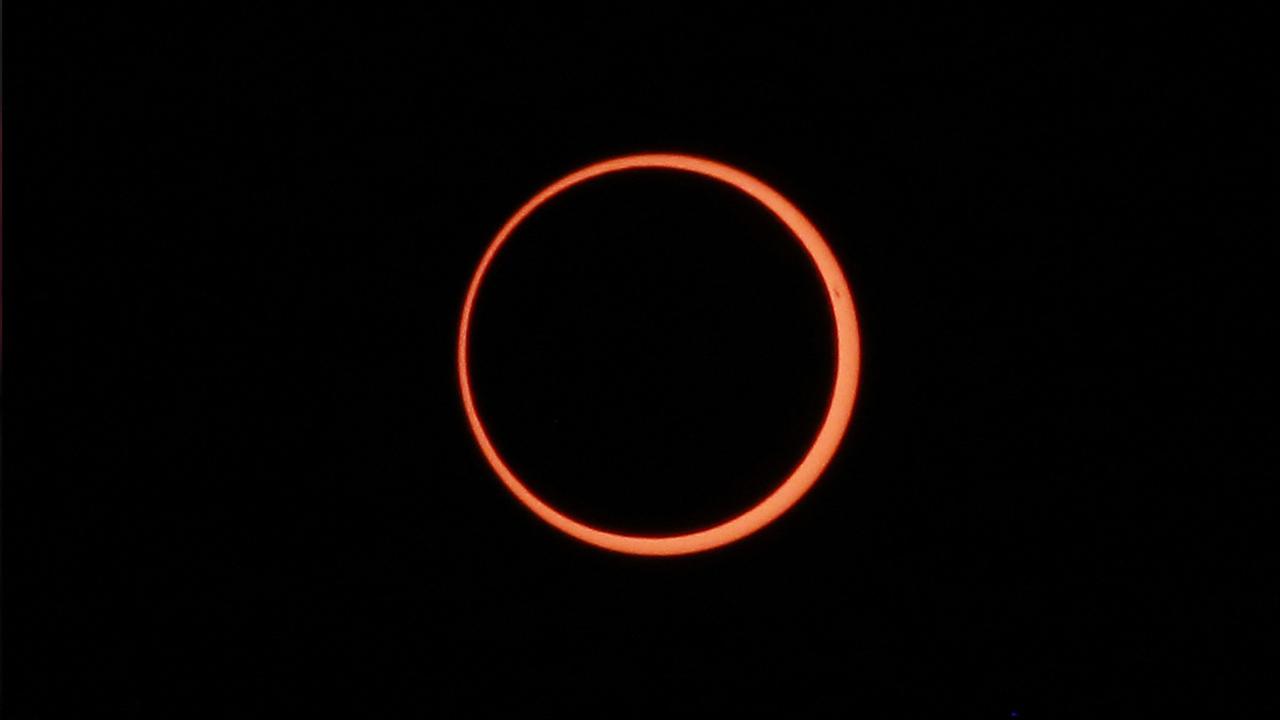
In an annular solar eclipse, the Moon is farther from Earth in its orbit, so it does not fully cover the Sun. A bright portion remains visible. “Basically, the core of the Sun is carved out,” Llama said, describing the ring-like effect.
Solar eclipses happen several times a year, but they are only visible from locations that fall within the Moon’s shadow path. Two partial eclipses occurred last year.
Do not look directly at a solar eclipse
Looking straight at the Sun is dangerous — even when most of it is covered — so viewers should use proper eclipse glasses. These glasses block ultraviolet rays and nearly all visible light. Regular sunglasses and binoculars do not provide adequate protection.
Eclipse glasses should state that they meet the ISO 12312-2 standard, though consumers are warned that counterfeit suppliers may print the same claim on products that do not actually comply.
There are also indirect ways to enjoy a solar eclipse. One option is to make a pinhole projector using common household materials. Another is to hold a colander or cheese grater up to the sky and look down to see the eclipse pattern projected onto the ground.

A total solar eclipse is expected in August 2026 for skywatchers in Greenland, Iceland, Spain, Russia and parts of Portugal. Most of Europe, Africa and North America are expected to see a partial eclipse.
Longest total solar eclipse in 100 years
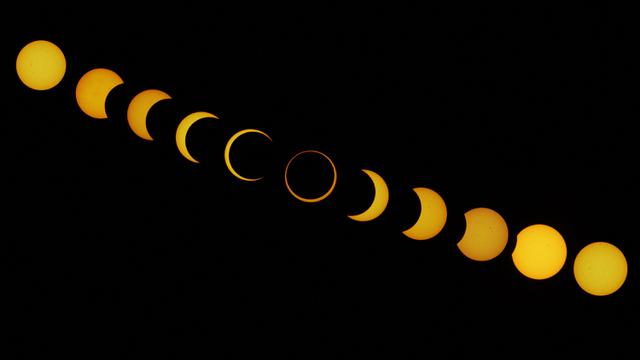
Meanwhile, according to NASA’s solar eclipse calendar, Earth is expected to experience the longest total solar eclipse in the past 100 years on Aug. 2, 2027.
Although it is still some time away, the path of totality is not expected to include Indonesia, meaning travelers would need to plan ahead. Citing Martha Stewart (Jan. 19, 2026) referencing NASA, the eclipse will begin over Morocco and southern Spain, then move across Algeria, Tunisia, Libya, Egypt and Saudi Arabia.
The event is expected to end over Yemen and the coast of Somalia. The peak will occur near Luxor, Egypt. Totality is forecast to last 6 minutes and 23 seconds, making it the longest total solar eclipse until 2132.
During a total solar eclipse, the Moon completely covers the Sun, briefly plunging daytime into darkness. In that window, stars and planets can appear in the sky, and the Sun’s white outer atmosphere becomes visible around the Moon’s edge.
What’s the difference between a total and an annular solar eclipse?
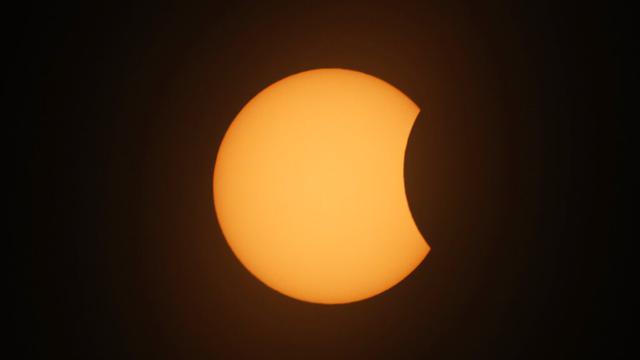
The Moon moves across the Sun during a total solar eclipse in Piedra del Aguila, Argentina, on Monday, Dec. 14, 2020. The total eclipse was visible from northern Patagonia in Argentina and from the Araucania region in Chile. (AP Photo/Natacha Pisarenko)
A solar eclipse occurs at new moon, when the Moon aligns between Earth and the Sun and its shadow falls on our planet. In a total solar eclipse, the Moon is close enough to Earth that it appears the same size as — or slightly larger than — the Sun, allowing it to fully cover the solar disk and briefly turn day into night.
An annular eclipse, by contrast, happens when the Moon is farther away in its slightly elliptical orbit and appears slightly smaller than the Sun. Instead of blocking the Sun completely, an annular eclipse leaves a bright ring of sunlight around the Moon — the striking “ring of fire” effect.
These celestial events consistently draw public attention. But they must never be viewed carelessly, as they can cause permanent damage to the retina. Exposure to extremely bright sunlight can injure the eyes in a very short time.
Indonesianpost.com | Liputan6
