
Indonesia’s Islamic Economy Ranking Declines Amid Global Competition
00:00
00:00


- Indonesia has dropped to fourth place in the Global Islamic Economy Indicator 2025, despite maintaining strong performance across several halal industry sectors.
- The country remains the global leader in modest fashion, but it still trails other nations in Islamic finance and Muslim-friendly travel.
- Experts say Indonesia needs stronger halal supply chains, greater innovation, and broader Islamic financing support to improve its global competitiveness.
Jakarta – Indonesia has slipped one position in the global Islamic economic landscape, now ranking fourth in the Global Islamic Economy Indicator (GIEI) 2025/2026. The latest report, released by DinarStandard, places Indonesia behind Malaysia, the United Arab Emirates (UAE), and Saudi Arabia, while Bahrain holds the fifth position.
Despite the drop from third place in the previous edition, Indonesia continues to demonstrate strong competitiveness across several halal industry sectors. The country leads globally in modest fashion, ranks third in halal food as well as media and recreation, and holds fourth place in both halal pharmaceuticals and cosmetics.
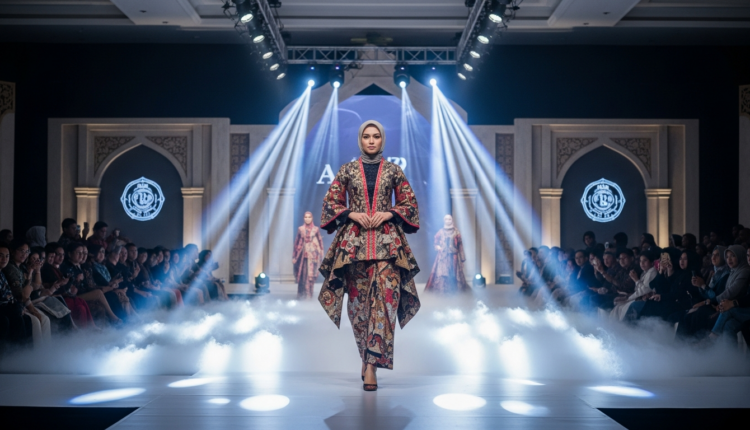
Indonesia stands out as the world’s top performer in modest fashion, outperforming the UAE, Turkey, Malaysia, and Italy. This achievement reinforces its position as a major hub for Muslim fashion on the global stage.
In the halal food sector, Indonesia ranks third worldwide, trailing Malaysia and the UAE but outperforming Thailand and Brazil. Similarly, in media and recreation, Indonesia also holds third place, behind the UAE and Malaysia, while surpassing Singapore and China.
Performance in halal pharmaceuticals and cosmetics remains competitive. Indonesia ranks fourth globally in both sectors. In halal pharmaceuticals, it sits below Malaysia, the UAE, and Singapore. In halal cosmetics, it ranks below Malaysia, the UAE, and Singapore, but still ahead of France.
However, Indonesia has yet to break into the top five in Islamic finance and Muslim-friendly travel. In Islamic finance, the leading countries are Malaysia, Saudi Arabia, the UAE, Iran, and Bahrain. Meanwhile, the top destinations for Muslim-friendly travel are Bahrain, the UAE, Saudi Arabia, Malaysia, and Turkey.

The SGIE 2025/2026 report highlights a shift in the global Islamic economy. Growth is no longer driven solely by rising Muslim consumer demand. The focus is now moving toward strengthening halal supply chains, standardization, digital trust infrastructure, and Islamic financing systems.
“The future competitiveness of the Islamic economy will be shaped by the integration of standards, Islamic finance, trade, and innovation,” the report states.
Globally, Muslim consumer spending across six real sectors reached 2.60 trillion US dollars in 2024 and is projected to grow to 3.56 trillion US dollars by 2029. Islamic financial assets are expected to increase from 5.99 trillion US dollars to 9.72 trillion US dollars during the same period.
The report also notes that investment activity in the Islamic economy reached approximately 13.11 billion US dollars across 346 transactions in 2024/2025. The largest share of investment flowed into Islamic finance, followed by halal food, media and recreation, and Muslim-friendly travel.
Indonesia has gained additional momentum through the expansion of halal certification recognition. According to the report, the country has established 92 mutual recognition agreements (MRAs) with 24 countries. This development is expected to broaden market access for Indonesian halal products.
The report concludes that Indonesia’s large Muslim population and strong domestic market do not automatically guarantee global competitiveness. Strengthening halal supply chains, fostering innovation, and expanding Islamic financing remain critical to improving the country’s standing in the global Islamic economy.
Indonesianpost.com | Republika
