
Banyuwangi Preserves Ancient Kebo-Keboan Ritual Amid Growing Tourism Interest
00:00
00:00


- The Kebo-Keboan ritual in Banyuwangi showcases a centuries-old agrarian tradition where villagers dress as buffaloes to express gratitude for harvests and pray for protection from misfortune.
- Blending spirituality, cultural heritage, and community values, the Kebo-Keboan festival continues to attract both local participants and international tourists.
- This unique East Java tradition highlights the importance of nature, cooperation, and local wisdom, reinforcing Banyuwangi’s identity as a cultural tourism destination.
Jakarta — Hundreds of residents of Alasmalang Village in Singojuruh district, Banyuwangi, gathered on Sunday (June 28, 2026) to perform the Kebo-Keboan ritual, a long-standing tradition held to express gratitude for harvests and to ward off misfortune.
Held annually during the Islamic month of Muharram, the ritual features villagers dressed as buffaloes parading around the village, symbolizing the agrarian roots of the community. Farmers also carry whips as part of the procession, representing traditional farming practices in the fields.
For the farmers of Alasmalang, the buffalo embodies prosperity and dignity. The Kebo-Keboan ritual serves not only as a thanksgiving ceremony for abundant harvests but also as a collective prayer to protect crops from pests and disease.
Banyuwangi cultural observer Aekanu Hariyono explained that the tradition carries deeper meaning beyond its visual spectacle. It reflects a shared spiritual expression among villagers from diverse religious backgrounds.
“Various prayers are offered here across different faiths, not only Islam. These prayers may differ, but they share a common purpose — the welfare of the village and Banyuwangi as a whole,” Aekanu said, as quoted by detikJatim.
He added that the strong agrarian symbolism embedded in the ritual reflects the philosophy of gemah ripah loh jinawi — a vision of prosperity, fertility, and social harmony.
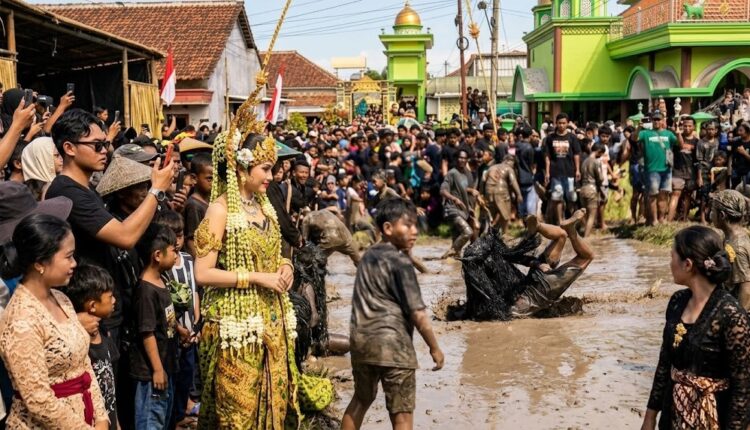
“The most visible element is the agrarian aspect, with displays such as penjor and agricultural produce. The message is clear: if you want prosperity, you must care for nature,” he said.
Banyuwangi Regent Ipuk Fiestiandani attended the event and expressed appreciation for the community’s commitment to preserving its cultural heritage while continuing to innovate.
“I am delighted to see the community so enthusiastic, creative, and joyful,” she said.
Ipuk emphasized that the Kebo-Keboan tradition is an integral part of Banyuwangi’s agrarian identity and demonstrates the enduring strength of local wisdom.

“This tradition has been preserved for centuries, passed down from generation to generation. I commend the elders, cultural figures, youth, and all members of the community who continue to keep this tradition alive,” she added.
According to Ipuk, Kebo-Keboan is more than a ritual; it is a cultural practice that instills values such as hard work, cooperation, and discipline within the agrarian community.
“These values align with Banyuwangi’s spirit of tandang bareng — working and growing together. Every achievement in Banyuwangi is the result of collective effort,” she said.
The ritual unfolds with participants, acting as “buffaloes,” parading throughout the village. They mimic the behavior of buffaloes plowing fields, wallowing in mud, and rolling along the streets they pass. Participants are tied around the waist, further enhancing the realism of the performance.
The “buffaloes” are not animals but selected villagers believed to be descendants of the village’s founding ancestors. Their role is central to maintaining the continuity of the ritual and preserving local traditions.
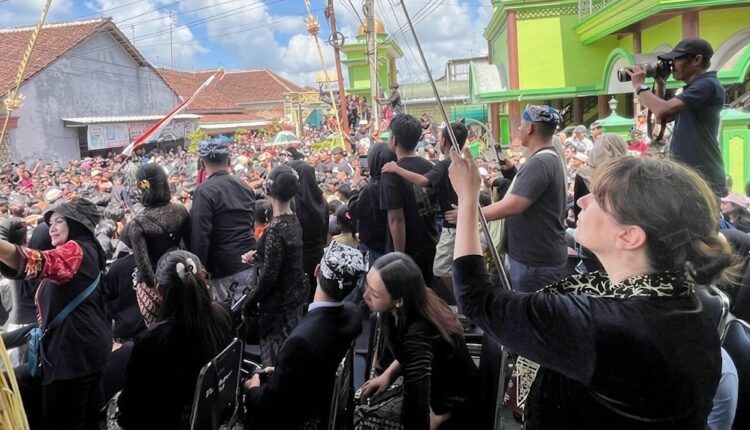
Among the spectators was Lara Cummings, a tourist from Michigan, United States, who appeared captivated by the vibrant celebration. She followed nearly the entire series of events, documenting the experience on her phone.
Sitting among the crowd, Lara occasionally stood to capture moments of the performance, fully immersed in the atmosphere accompanied by traditional music.
“I feel a sense of warmth here. Everyone comes together, smiling, laughing, sharing meals, and enjoying the performance,” she said.
“I’ve never seen anything like this before. It’s truly unique,” she added.
Beyond attending the Kebo-Keboan ritual, Lara also explored various tourist destinations in Banyuwangi and sampled local cuisine.
“I find Banyuwangi incredibly enjoyable — great hiking spots, delicious food, and rich traditions,” she said.
Indonesianpost.com | Detik
