
The Legend of Si Hideung Wisesa: The Black Dog Protector of Mount Malabar
00:00
00:00


- “Si Hideung Wisesa,” the black dog of Mount Malabar, is believed to guide and protect hikers on the mountain trails. Locals link the legend to a plantation overseer, Gerald Alfred Group, and his faithful dog that never left his side—even after death.
- The folklore surrounding Mount Malabar describes a group of black dogs guarding the mountain, believed to be mystical protectors of nature and balance. Despite a lack of historical evidence, their presence remains part of local hiking stories.
- Blending myth and geography, the story of Si Hideung Wisesa reflects Sundanese culture’s deep respect for nature. Each black dog symbolizes spiritual guardianship, reminding hikers to behave humbly and harmoniously with the mountain.
Malabar Mountain has always felt different from the very first step. The journey through the Cinyiruan route in Pangalengan unfolds an atmosphere that gradually shifts. A vast expanse of tea plantations stretches like a green carpet silently watching over visitors.
The cold air carries an inexplicable sense of unease. After passing through bushes and trees, the landscape changes again. Vegetable farms cultivated by local farmers come into view, adding a calm rhythm to the mountain’s breath. It is here that an old story begins to stir—the legend of Si Hideung Wisesa.
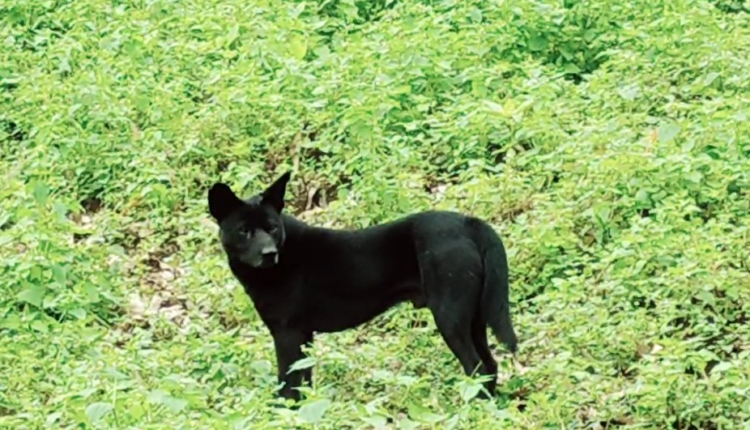
As climbers reach the path leading to the first post, the forest grows eerily silent. Out of nowhere, a black dog emerges quietly from behind the trees. Its fur is sleek, its eyes tranquil, and its steps light. The animal neither barks nor shows hostility. Instead, it leads the way forward as though knowing precisely where the hikers intend to go. Strangely, its presence brings an odd sense of safety.
Some assume it belongs to local villagers, yet none ever claim ownership. It seems as if the dog belongs to the trail itself.
When the path forks and hesitation creeps in, the black dog pauses and looks back, before calmly taking one side of the trail with unbothered certainty. The hikers who follow always find that the route proves correct. After several hundred meters, the dog usually stops at a certain point—only to be replaced by another similar black dog emerging from the forest’s depth. The transitions occur smoothly, almost ritualistically. By the time climbers reach the first post, four different dogs have appeared as if conducting a quiet relay of guardianship.
Beyond the first post, the next guardian looks slightly different. Its fur remains black, but a small white ring encircles its neck. This one is notably friendlier, accepting a piece of bread from a hiker’s hand calmly rather than eagerly.
Then, the forest shifts again. From behind, an elderly man appears silently—wearing an udeng headcloth and simple traditional clothes. His calm greeting in Sundanese soothes the chilly air. He explains that the dogs are not dangerous; they accompany anyone who climbs with good intentions. Should a hiker face confusion at a junction, the dogs will show the right way.
But there are rules, he continues. One must never speak rudely, shout in the forest, or harm plants and trees. The mountain is sensitive to human behavior, and the dogs serve as protectors of balance. Their barks, he warns, are a reminder—not a threat. Ignoring them, however, could lead to trouble. Sometimes they bite, not out of anger, but to enforce the rules of nature.

The old man also mentions that a dog can even follow someone home. But do not be surprised when it disappears upon arrival—it always returns unseen to Malabar. Before a question could be asked, the man walks ahead and vanishes without a trace. The forest swallows the moment, leaving behind a story half-whispered by the wind.
Local legends connect the black dogs to Gerald Alfred Group, a British cinchona expert and plantation supervisor who once lived at the foot of Malabar Mountain. Gerald was known to live alone with a loyal white dog always by his side. They were inseparable as they explored the plantations and forests together. Years passed quietly until Gerald’s death in 1973.
After his passing, villagers often heard his dog howling daily near his grave. Considered disturbing, the villagers chased it into the forest. Yet a few days later, it returned to Gerald’s grave—its white fur now pitch black. Locals believed its grief had turned it dark. It lay silently upon the grave under a large banyan tree, and since then, the townsfolk named it Si Hideung Wisesa.
“Hideung” means black—a symbol of sorrow and steadfast spirit. “Wisesa” means empowered, wise, and spiritually controlled. The name binds the creature to both mourning and mystical guardianship.
Si Hideung Wisesa is not just a mountain dog. It is seen as the bridge between nature and humans. Another strange belief persists: every ten years, another black male dog appears. According to the pattern since Gerald’s death in 1973, their number should now be five. None of them ever seem to age, eat, or hunt. They simply come and vanish along the same trails.
Some hikers have tried to bring the dogs home. The animals follow willingly but vanish upon arrival—only to reappear back along Malabar’s trail. At night, their distant howls echo through the forest, not eerily, but as a reminder. Those who disrespect the mountain often lose their way; those who maintain good manners always find their path safely.
Sometimes the mist parts strangely, revealing faint paw prints on the moist forest soil. The mountain seems to breathe along with their silent watch. For locals, Si Hideung Wisesa remains a watchful symbol of Mount Malabar—a spiritual reminder of respect between humans and the natural world.
All these stories live through oral tradition. There is no official record or research confirming them. Historians have not established any verified link between Gerald’s life and the dogs. While some dismiss it as a coincidence wrapped in imagination, others believe the legend should be respected as part of the mountain’s mystery.
Mount Malabar stands still, neither affirming nor denying the tale. Yet, the black dogs remain—faithful shadows guarding the mountain’s trails.
Note: The story of Si Hideung Wisesa is a work of imaginative folklore inspired by real geographic settings (Mount Malabar, Cinyiruan Route) and local oral traditions. Characters like the black dog guardian, Gerald Alfred Group, and the rule of ten-year appearance cycles have no official historical documentation.
Indonesianpost.com | GNFI
