
Indonesia Weighs Crypto’s Place in Islamic Finance
00:00
00:00


- Future Potential: Islamic financial planner Harryka Joddy says learning about crypto remains worthwhile as its potential for Sharia compliance evolves.
- Gold-Backed Tokens: Gold-backed tokens offer international examples of efforts to align crypto assets with Islamic finance principles.
- Broader Dialogue: Indodax says its membership in the Indonesian Sharia Fintech Association could broaden dialogue on crypto and the digital halal ecosystem.
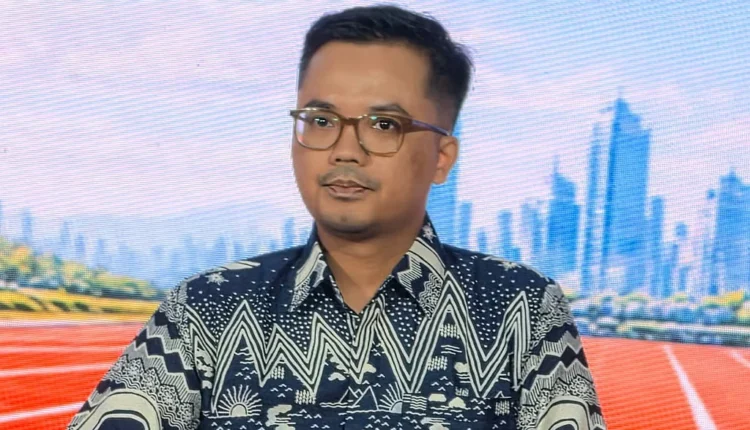
JAKARTA, Indonesianpost.com — The current barriers to Sharia-compliant cryptocurrency in Indonesia need not be permanent, Islamic financial planner Harryka Joddy said, arguing that people can still benefit from learning about the crypto ecosystem.
“For now, in Indonesia, I feel we are not there yet because, as the Indonesian Ulema Council has said, speculation remains high,” Joddy told Swara Indonesia Raya at the Capital Market Summit & Expo 2026 at the Indonesia Stock Exchange in Jakarta in early November 2026.
Joddy pointed to Indonesian Islamic organizations Muhammadiyah and Nahdlatul Ulama, which he said have permitted crypto assets provided they are backed by underlying assets. Such asset-backed cryptocurrencies already exist in several countries, he added.
Internationally, Sharia-compliant crypto typically falls within the category of real-world assets, involving tokenized instruments that represent ownership of physical assets or Sharia-compliant financial products.
Joddy cited cryptocurrencies backed by physical gold overseas. One example is OneGram, a Dubai-based crypto project designed from the outset to comply with Sharia principles, with each token backed by one gram of gold held in a physical vault.
Another example is PAX Gold, whose Sharia compliance has been reviewed by global Islamic finance advisers and whose tokens represent ownership of physical gold that can be redeemed. The gold backing PAX Gold is stored in Brink’s vaults in London, with each token backed by one troy ounce of gold bullion.
“Perhaps, once global finance has gone fully digital, crypto could become a permissible financial instrument in the future,” Joddy said.

Since their arrival in Indonesia more than a decade ago, crypto assets have raised questions about their compatibility with Sharia principles.
After officially joining the Indonesian Sharia Fintech Association on October 20, 2026, crypto exchange Indodax said it hoped to broaden dialogue with stakeholders on financial technology developments and issues surrounding Indonesia’s digital halal ecosystem.
Indodax Vice President Antony Kusuma told Swara Indonesia Raya that Sharia-compliant crypto assets were not new internationally. He cited Bahrain as a pioneer in regulating Sharia-compliant crypto exchanges in the Middle East through the Central Bank of Bahrain.
In Malaysia, the Securities Commission Malaysia’s Shariah Advisory Council has formally recognized digital assets as property that can be traded on registered digital asset exchanges under standardized Sharia-screening guidelines.
“Understanding crypto from a Sharia perspective provides an important bridge between modern investment instruments and compliance with Islamic commercial jurisprudence,” Antony said on November 2, 2026.
Data from Indonesia’s Financial Services Authority show that crypto transactions totaled Rp 224.84 trillion from January through September 2026. In September alone, transaction value reached Rp 30.56 trillion, while the number of user accounts stood at 23.51 million.
Indonesia currently has two crypto exchanges, PT Central Finansial X (CFX) and PT Fortuna Integritas Mandiri (ICEX), each of which independently maintains its own list of approved digital financial assets. As of September 2026, CFX listed 1,298 tradable crypto assets, while ICEX listed 1,192. [SWARAIR/Bilah]
