
Bali’s Masjid Pantai Bali Highlights Hajj and Umrah Simulation Facility Ahead of Launch
00:00
00:00


- Masjid Pantai Bali in Jembrana is preparing a Feb. 7, 2026 soft launch tied to Tarhib Ramadan, positioning the site as a new coastal religious tourism destination.
- The project promotes a 5E “Smart Mosque” concept and highlights Bali’s first Hajj and Umrah simulation facility featuring key holy-site replicas.
- Local authorities have expressed support, citing alignment with tolerance, local culture preservation and community-based economic development.
The Masjid Pantai Bali team is finalizing preparations for the inauguration (soft launching) of Masjid Pantai Bali Religious Tourism, scheduled for Feb. 7, 2026, to coincide with the Tarhib Ramadan 1447 Hijri program.
To help ensure the event’s success, Firmansyah Dimmy, chairman of the Masjid Pantai Nusantara Foundation (YMPN), along with Ustadz Bambang Santoso, chairman of the Bali chapter of the Indonesian Mosque Council (DMI), and Ustadz Ahmad Sugiarto from DMI’s central board, met with DMI patron Jusuf Kalla on Jan. 7, 2026, at his residence in Jakarta.
During the meeting, the delegation presented a “Smart Mosque” vision for developing Masjid Pantai Bali through the 5E concept—education, economy, ecology, empathy and entertainment—positioning it as a mosque-based coastal religious tourism destination that integrates worship, learning, technology, economic activity and culture rooted in local wisdom, while supporting Muslim-friendly tourism.
Firmansyah Dimmy said each mosque has its own character and strengths. Masjid Pantai Bali, he added, is being developed with a distinctive ecosystem—both in infrastructure and non-infrastructure—designed to serve worshippers while also becoming a religious tourism draw in Bali.
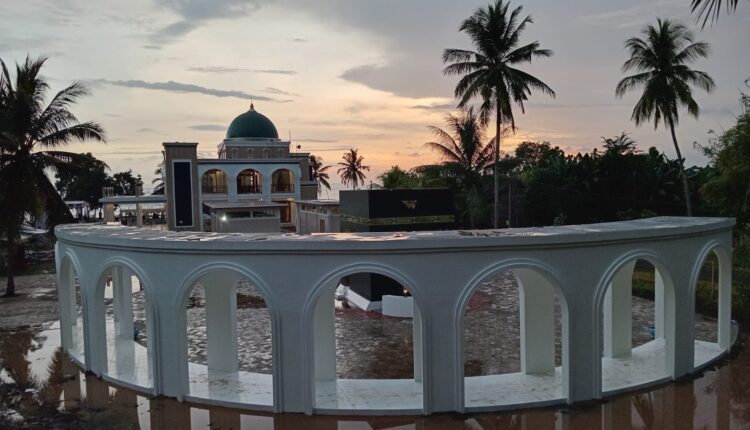
Among its key infrastructure highlights is Bali’s first Hajj and Umrah simulation facility, featuring miniatures of the Ka’bah, the Hajar Aswad, Masjid al-Haram, Hijr Ismail, Maqam Ibrahim, the Jamarat and the Safa–Marwa route. The facility is expected to serve as an educational space for the public, schools and Muslim visitors.
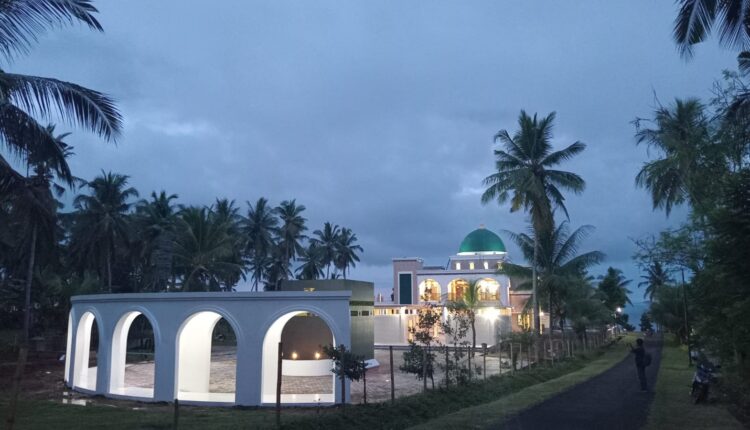
The mosque complex also includes two prayer buildings—the old mosque and the new mosque—each carrying historical value and its own narrative of Islamic outreach (storytelling) along Bali’s coastal communities.

Another key appeal is its seaside location, offering natural panoramas and sunset views that add to the site’s attraction and create a reflective atmosphere for worship in harmony with nature.
Beyond physical infrastructure, Masjid Pantai Bali is also building an activity ecosystem that connects land, sea and air. Programs include cultural performances, MSME workshops and coastal community economic empowerment initiatives.
In the maritime sector, the mosque’s management has been promoting local culture through traditional sailing boat (jukung) races and rowing competitions (omplok), involving fishing communities across Java and Bali.
Technology is also being brought into the program through the use of drones over Jembrana for documentation, promotion and visual outreach, aiming to engage younger audiences and expand the visibility of Masjid Pantai Bali’s religious tourism initiative.
As part of the soft-launch preparations, the Masjid Pantai Bali team and the local hamlet head also met with Jembrana Regent I Made Kembang Hartawan in Jembrana, Bali, on Jan. 22, 2026, at the regent’s official residence.
The meeting discussed event readiness as well as cooperation between the mosque’s management and the Jembrana administration in developing religious tourism and strengthening the local economy.
The regent welcomed the initiative, saying the development of Masjid Pantai Bali’s religious tourism aligns with the spirit of tolerance, the preservation of local culture and the promotion of tourism based on local wisdom in Jembrana.
Through this development, Masjid Pantai Bali is expected to become a model for mosque-based coastal religious tourism, while reinforcing the mosque’s role as a center for worship, education, technology, culture and social harmony in Bali.
