
President Lee Signals Possible Arrest Warrant for Netanyahu Amid Gaza Tensions
00:00
00:00


- South Korea is evaluating legal measures against Benjamin Netanyahu after Israel intercepted a humanitarian aid flotilla bound for Gaza.
- President Lee Jae Myung questioned the legality of Israel’s actions, citing potential violations of international law and human rights.
- The incident has intensified diplomatic tensions and renewed global debate over the Gaza blockade.
Jakarta – South Korea is weighing the possibility of issuing an arrest warrant for Israeli Prime Minister Benjamin Netanyahu following the interception of a humanitarian aid flotilla bound for the Gaza Strip, President Lee Jae Myung said during a cabinet meeting on Wednesday (May 20, 2026).
Lee instructed senior officials to examine the legal grounds for such a move after Israeli forces seized the “Global Sumud Flotilla,” a convoy carrying humanitarian assistance, which included two South Korean nationals among its activists.
The president sharply criticized the operation, questioning the legal justification behind Israel’s interception of the vessels. He raised concerns over whether the ships had entered Israeli territorial waters or violated internationally recognized maritime boundaries.
“Several European countries have already issued arrest warrants for Netanyahu following the International Criminal Court’s designation of him as a war crimes suspect. We should also consider taking similar action,” Lee told his cabinet, as reported by Korea JoongAng Daily.
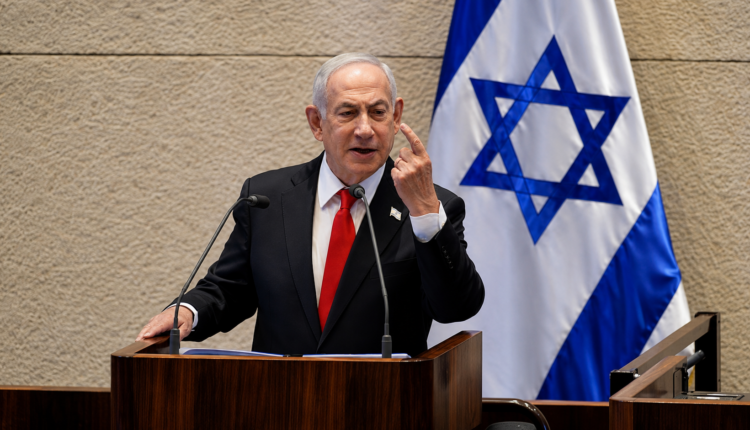
He emphasized that minimum international norms must be upheld and suggested that Israel’s actions may have crossed legal boundaries. “There are principles that must be respected. We have tolerated this for far too long,” he said, according to The Chosun Daily.
Lee also questioned the broader legality of Israel’s actions, particularly regarding the seizure or possible sinking of vessels carrying foreign nationals engaged in humanitarian work. He raised a pointed question about whether Israel’s ongoing military presence and control over Gaza could be considered lawful under international law.
National Security Adviser Wi Sung-lac responded cautiously, noting that the issue requires careful legal review. He pointed out that the current conflict was triggered by a Hamas attack that killed nearly 2,000 people, prompting Israel to impose military control over the territory.
Lee, however, pressed further, asking whether Gaza could be considered Israeli sovereign territory. Wi acknowledged that it is not.
“Shouldn’t we at least lodge a formal protest? Even in wartime, can a vessel from a third country be seized like this? This is a matter of basic logic, not just legal interpretation,” Lee said.

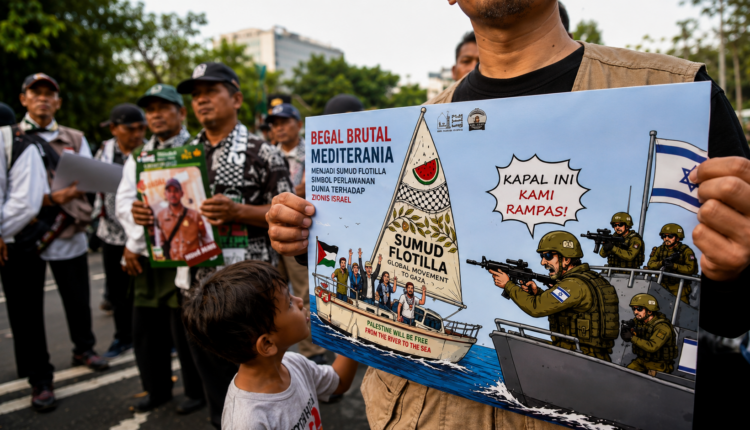
Attack on Global Sumud Flotilla
The Israeli navy’s operation against the aid flotilla resulted in the detention of multiple activists, including two South Korean citizens.
The convoy, consisting of more than 50 vessels, departed from Marmaris on Turkey’s Mediterranean coast last Thursday. It was part of a broader international effort to break Israel’s long-standing blockade on Gaza, which has been in place since 2007.
Organizers stated that the mission involved 426 participants, including 96 Turkish activists and hundreds of volunteers from 39 countries. These included Germany, the United States, Argentina, Australia, Bahrain, Brazil, Algeria, Indonesia, Morocco, France, South Africa, the United Kingdom, Ireland, Spain, Italy, Canada, Egypt, Pakistan, Tunisia, Oman, and New Zealand.
This was not the first such incident involving the group. Israeli forces previously intercepted a similar Global Sumud flotilla near Crete, Greece, during the night of April 29–30.
Rising Seoul–Tel Aviv Tensions
President Lee’s remarks mark the second time he has publicly criticized Israel over alleged human rights violations, signaling a shift toward a more assertive foreign policy stance.
Last month, Lee shared a 2024 video on his official X account showing what he described as excessive force by Israeli soldiers against a Palestinian child. The post quickly gained international attention and fueled online debate over universal human rights standards.
The latest developments suggest that diplomatic relations between Seoul and Tel Aviv may face further strain as legal and ethical questions surrounding the Gaza conflict continue to intensify.
Indonesianpost.com | Republika
